
-
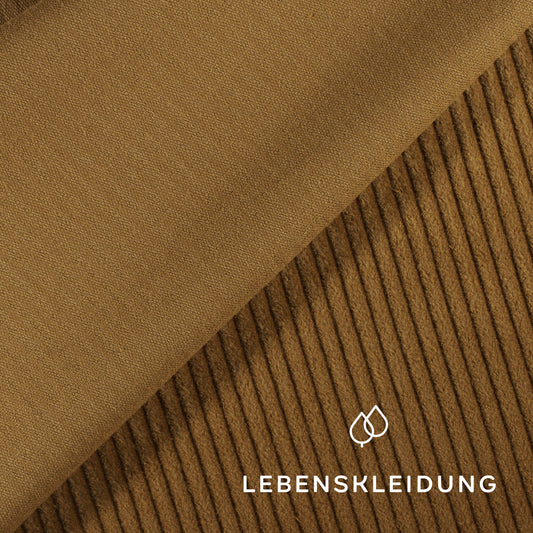
Organic fine corduroy 1mm - Caramel
Regular price €15,70 EURRegular price€18,84 EURSale price €15,70 EURSale -
Bio Cord 4,5mm - Charcoal
Regular price €15,70 EURRegular price€18,84 EURSale price €15,70 EURSale -

 Sold out
Organic Corduroy Fabric - Toffee
Regular price €19,42 EURRegular price€23,31 EURSale price €19,42 EURSold out -
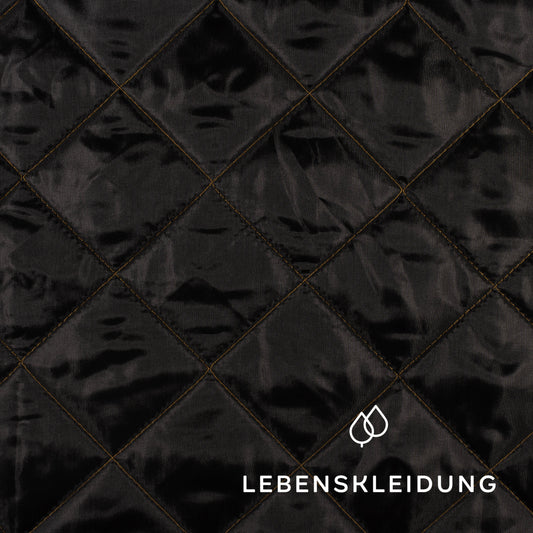
Organic Corduroy Quilted Fabric - Toffee
Regular price €30,87 EURRegular price€37,06 EURSale price €30,87 EURSale




Our everyday clothing corduroy fabric - a classic from the island conquers the fashion world
Corduroy was already being mass-produced in Manchester in the late 18th century – and thus became increasingly affordable. Consequently, corduroy was initially one of the most important materials for working-class fashion in England. It arrived in Germany a little later and quickly found its way into guild clothing. This is hardly surprising, as corduroy is incredibly robust and durable. It also became important for intellectuals in the 1960s and 70s: they wanted to distinguish themselves stylistically from the elites and thus turned to this staple of the working class.
- After corduroy fabric was widely considered unwearable in the 2000s, it has been making a comeback for some time now: in casual dungarees, as furniture coverings or in children's clothes, but also in hip two-piece suits, flared trousers or long skirts.
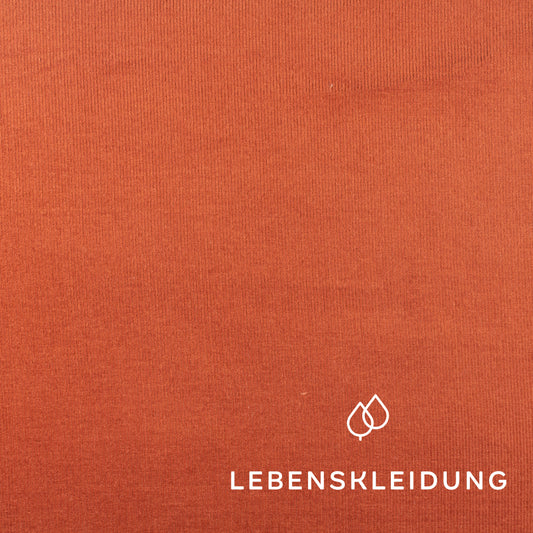
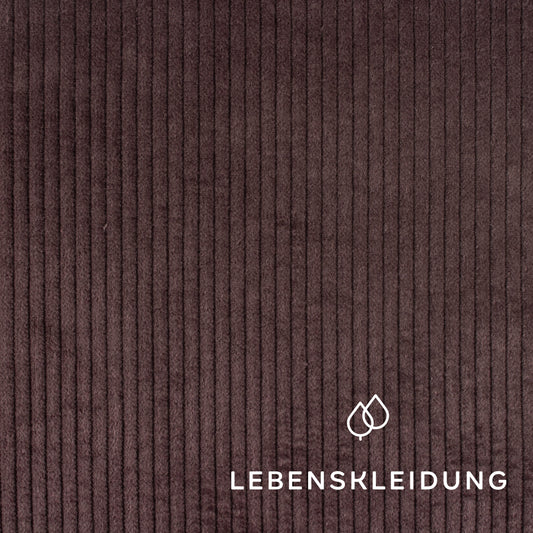
- Different types of corduroy are distinguished by the number of ribs per ten centimeters – the more ribs, the finer the finished fabric. In your Lebenskleidung shop, you'll find fine stretch corduroy, which, with more than 40 ribs per ten centimeters, is among the softest types of corduroy, as well as Genoa cord or cable cord, which are distinguished by their wider ribbing.
- Our corduroy fabric is made from organic cotton that carries the Global Organic Textile Standard seal, guaranteeing that minimum social and environmental standards are met throughout the entire value chain. Some of our corduroy qualities also contain a small percentage of elastane in addition to organic cotton, making the fabric not only softer but also stretchier.