
-

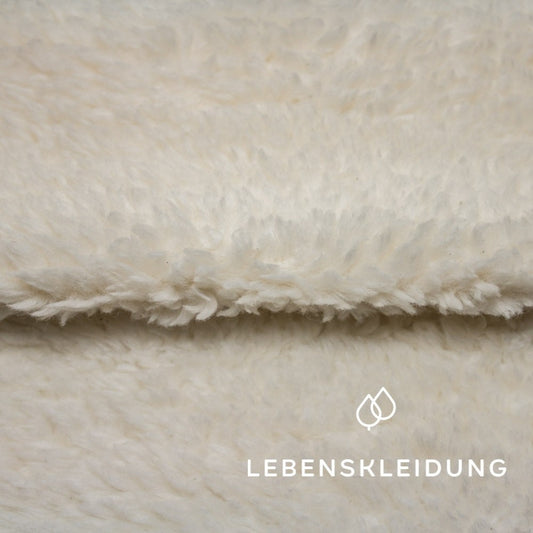 Sold out
Organic Plush Fabric - White
Regular price €27,54 EURRegular price€0,00 EURSale price €27,54 EURSold out -

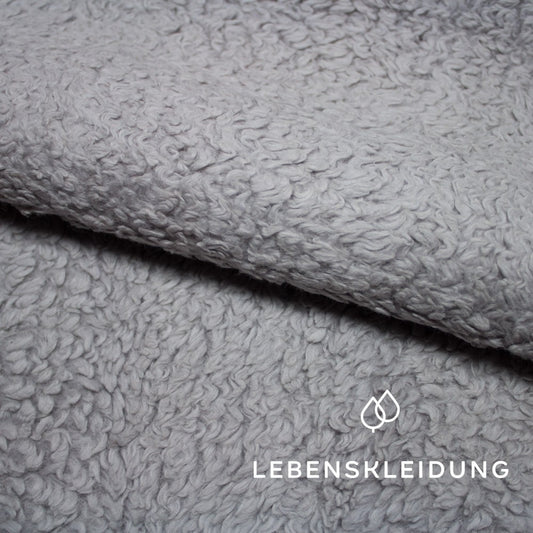 Sold out
Organic Plush Fabric - Grey
Regular price €30,42 EURRegular price -

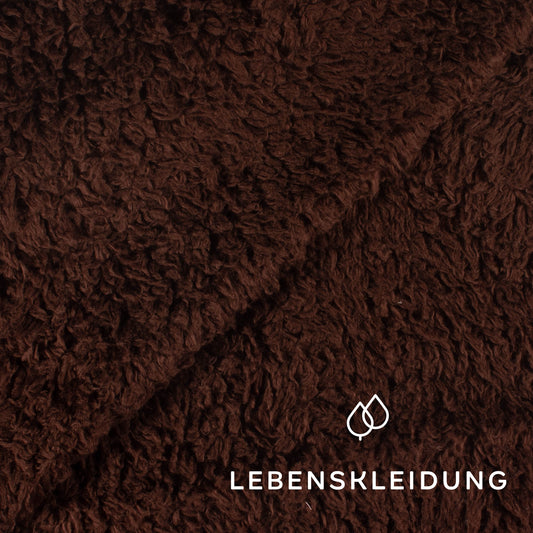 Sold out
Organic plush fabric - chocolate
Regular price €35,38 EURRegular price€0,00 EURSale price €35,38 EURSold out


Our organic plush fabric – not just for cuddly toys
The German version of the story is slightly different and naturally begins with Margarete Steiff. During a trade fair in 1903, Steiff presented the bear with movable limbs and initially faced a great deal of ridicule and criticism. However, an American customer eventually bought 3,000 teddy bears – thanks to the teddy bear craze in America.
- Whether the teddy bear is German or American is entirely up to you. What is certain, however, is that with Lebenskleidung's plush fabric, you can create stuffed animals that are not only beautiful but also sustainable. Why is that?
- Because our organic plush is made from 100% GOTS-certified cotton, which guarantees that strict social and environmental rules are followed.
- If you can only roll your eyes at the mention of stuffed animals, don't worry: our organic plush is also excellent in cuddly blankets or as lining in coats – and so, especially in the past two years, we have met lots of young, fresh labels that have used our plush fabric for sweaters or jackets.
- Plush fabric is generally easy to care for – just don't iron it or put it in the dryer! It can be a little tricky to work with for sewing beginners – it's best to pin it every 1-2 cm at the start to make sure nothing slips!
Plush fabric: Soft, cozy and versatile
When it comes to cozy and cuddly fabrics, plush fabric is an excellent choice. In this article, you'll learn more about the advantages and history of plush fabric.
The many advantages of plush fabric
Plush fabric offers a number of advantages that make it a popular material. One of its greatest benefits is its exceptional softness. The fabric feels pleasant against the skin and ensures you always feel cozy. Furthermore, plush fabric is very warm and insulating, making it ideal for cold seasons and chilly environments. Thanks to its dense structure, plush fabric also has excellent heat retention properties.
The story of plush fabric
Originally, plush fabric was made from silk and was a symbol of luxury and wealth. Over time, new manufacturing processes were developed, and plush fabrics were also produced from other materials such as cotton – just like our plush. Today, plush fabric is available in various colors and is used for a wide range of applications.
The applications of plush fabric
Plush fabric has a variety of uses. It is often used to make cuddly toys, blankets, pillows, and accessories. Plush fabric is extremely popular with children because it is so cuddly. In addition, plush fabric is also used for decorative purposes, such as upholstery for furniture or stage backdrops.
Care instructions for plush fabric
To maintain the softness and quality of your plush fabric, it is recommended to treat it according to the care instructions. Plush fabric can generally be washed at low temperatures. It is advisable to turn it inside out before washing and use a gentle cycle. Avoid using bleach and lay the plush fabric flat to dry to prevent deformation. With proper care, you can enjoy your cuddly plush fabric for a long time.