
-
Organic velour fabric - White
Regular price €9,16 EURRegular price€19,63 EURSale price €9,16 EURSale -
Re-Life Soft Organic Cotton Velour - Seagrass
Regular price €20,28 EURRegular price€24,34 EURSale price €20,28 EURSale -
Re-Life Soft Organic Cotton Velour - Aquamarine
Regular price €20,28 EURRegular price€24,34 EURSale price €20,28 EURSale -
Re-Life Soft Organic Cotton Velour - Petrol
Regular price €20,28 EURRegular price€24,34 EURSale price €20,28 EURSold out -
Re-Life Soft Organic Cotton Velour - Mauve
Regular price €20,28 EURRegular price€24,34 EURSale price €20,28 EURSale -
Re-Life Velour Fabric Dark Blue
Regular price €21,53 EURRegular price€25,85 EURSale price €21,53 EURSale -
Re-Life Jacquard Velour Fabric Royal Blue
Regular price €23,61 EURRegular price€28,34 EURSale price €23,61 EURSale

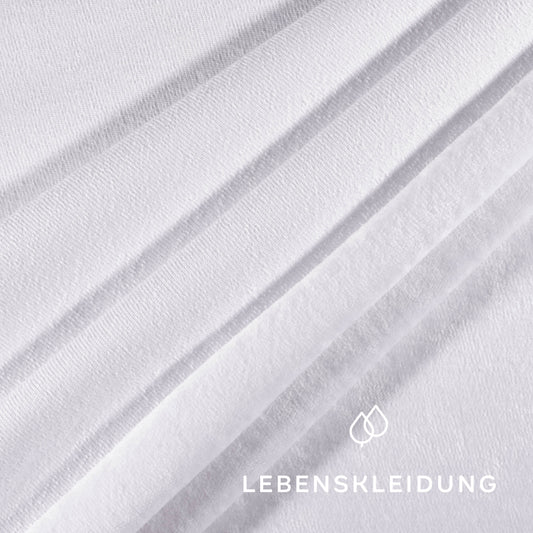

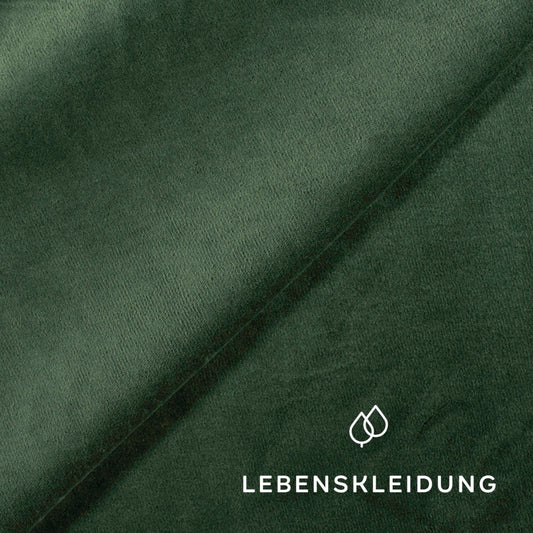

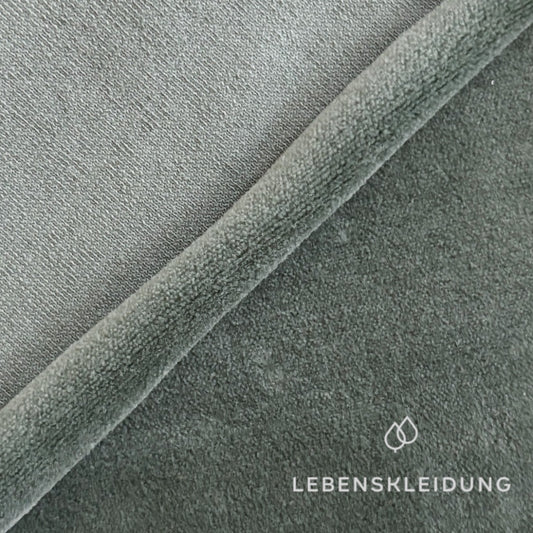


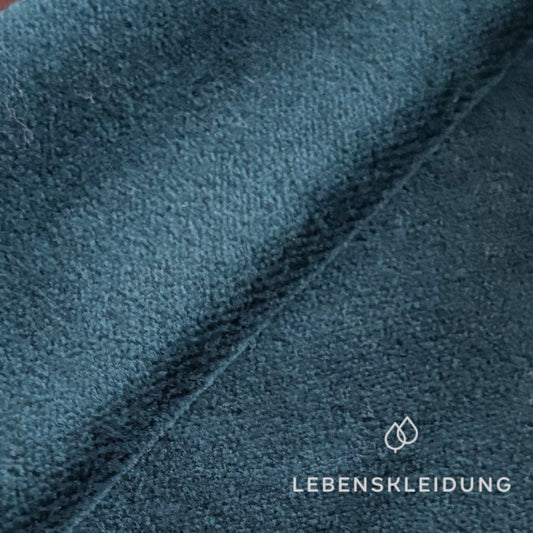

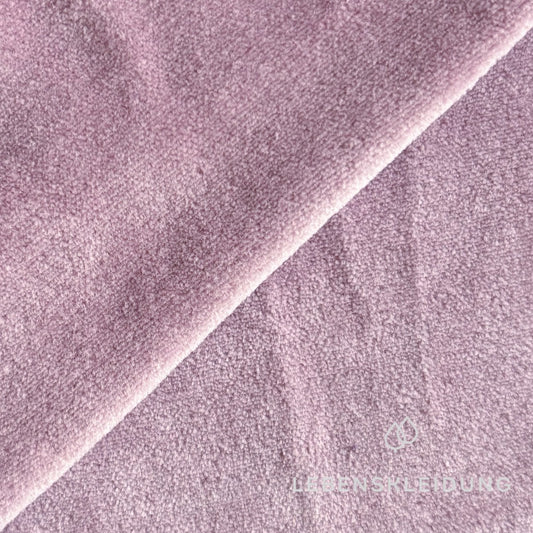


Lebenskleidung Nicki Fabric – for clothing and accessories
Our velour fabric is made from 100% GOTS-certified cotton, which is knitted rather than woven. An additional thread is incorporated into the knitting process, forming loops on the surface. Once the fabric is finished, these loops are cut, making the velour more elastic than woven fabrics – all without elastane.
You can use velour for almost anything you can think of. It goes just as well with cool shirts that blend sportswear and glamour as it does with children's pajamas.
- Since velour fabric is a top seller for us, you can get it all year round in many different colors. Classic tones like black, white, or gray are just as much a part of the collection as vibrant colors or more subtle melanges – because we know exactly how hard it can be to decide.
- Because velour fabric is naturally stretchy, it's best to use a non-slip mat when cutting – this will definitely make your life easier. When sewing, make sure the seam allowance is even everywhere.
- Nicki fabric is quite easy to care for. It doesn't like it too hot and doesn't need ironing – because as a rule, Nicki fabric is beautifully smooth and shiny even without much effort.
Our tip: Free velour from its role as a leisure fabric! Use it for pillowcases or throws – you won't regret it!
Velour fabric: A journey through time and texture
Velour fabric, also known as velour or nicky fabric, is a velvety, soft fabric widely known in the fashion world. This fabric has a special texture and elasticity that makes it attractive for various applications. But when did velour fabric actually become popular, and how can you best work with it, especially if it's made of organic cotton? Let's find out.
The versatility of velour fabric
Velour, Nicki fabric or Nicky fabric was used in many areas:
- Fashion: Whether in dresses, jackets or trousers, the velour fabric offers a luxurious look and a comfortable feel.
- Home textiles: From curtains to upholstered furniture, velour adds a touch of elegance to any room.
- Automotive industry: The use of velour in car seats has raised aesthetics and comfort to a new level.
When did velour become popular?
Velour became particularly popular in the 1960s and 1970s. The fabric was seen and used as a cost-effective alternative to velvet. Its beautiful velvety texture is still appreciated today.
Processing of velour fabric made from organic cotton
When working with velour fabric made from organic cotton, there are a few things you should keep in mind to get the most out of this luxurious material:
- Washing: Wash the fabric before processing, as organic cotton can shrink. Use cold water and mild detergents to maintain the quality.
- Cutting: Carefully cut the velour with sharp scissors to preserve the integrity of the fibers.
- Sewing: When sewing the velour fabric, use a universal needle and a straight stitch to achieve a clean finish.
- Ironing: Always iron the velour fabric from the reverse side and use a cloth to protect the fabric.
Nicki fabrics: Cuddly soft textiles with a history
When it comes to cuddly soft and comfortable fabrics, velour is a great choice. In this article, you'll learn more about the history and advantages of velour, a popular type of textile known for its softness and coziness.
The story of Nicki Stoffen
Velour fabrics have a long history, having first been produced in 19th-century France. Originally made from silk or cotton, they were prized for their soft texture and pleasant feel. Over time, velour fabrics have evolved and are now available in various materials such as cotton or viscose. Their popularity stems from their unique texture and comfort.
The advantages of velour fabrics
Velour fabrics are especially popular for leisurewear and home textiles due to their cuddly soft surface. The soft fibers offer a comfortable feel and are therefore perfect for cozy garments such as jogging pants, hoodies, and pajamas. Velour fabrics are also frequently used for baby clothes because they are gentle on the delicate skin of little ones. Furthermore, velour fabrics are easy to care for and retain their shape and color even after many washes.
The use of velour fabrics
Velour fabrics are used in the fashion industry for a wide variety of products, from comfortable loungewear collections to trendy casual outfits. In the home textiles sector, velour fabrics are popular for blankets, pillowcases, and bedding, creating a cozy atmosphere in the home. The versatility of velour fabrics makes them a valued material for various creative projects, such as handmade blankets and accessories.
Care instructions for velour fabrics
To preserve the softness and quality of your velour fabrics, it's advisable to care for them properly. Velour fabrics can generally be washed at low temperatures. However, always pay attention to the specific care instructions on the label to extend their lifespan. With proper care, your velour fabrics will remain cuddly soft and cozy for a long time.