
-
Indilisi Re-Life Tencel Denim - Blue
Regular price €22,15 EURRegular price€0,00 EURSale price €22,15 EUR -
Indilisi Re-Life Twill - Denim Chambray - Blue
Regular price €25,89 EURRegular price€0,00 EURSale price €25,89 EUR -

 Sold out
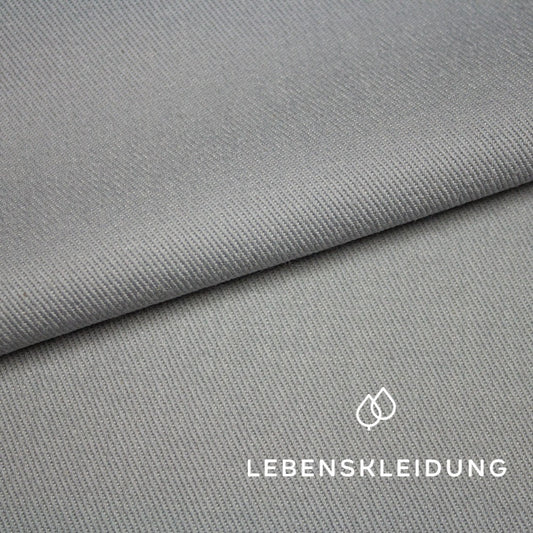
Organic denim fabric - Grey
Regular price €26,36 EURRegular price -
Indilisi Re-Life Twill - Denim Chambray - Blue
Business customers only -
Indilisi Re-Life Tencel Denim - Blue
Business customers only


With the denim fabric used in our clothing, everything fits as it should.
When Levi Strauss emigrated to San Francisco in 1847, he was incredibly lucky to be in the right place at the right time. During the California Gold Rush, thousands of gold miners flocked to San Francisco – and they were looking for sturdy trousers with pockets for their gold nuggets. Together with Jacob Davis, he patented the denim fabric designs in 1873 that would later revolutionize the fashion world.
- Initially, the trousers were made of brown canvas, but this was soon replaced by the famous blue cotton fabric. What followed was an unending triumph that continues to this day – because denim is more fashionable than ever.
- With organic denim from Lebenskleidung, you're on the safe side in two ways. Fashion-wise, it allows you to sew anything you can imagine, from carrot-leg trousers and skinny jeans to flared trousers or a casual bag. At the same time, it's made from 100% organic cotton and carries the GOTS (Global Organic Textile Standard) seal, which guarantees that your denim fabric meets strict environmental and social standards from the cotton field to the finished product.
- Did you know that jeans were a true symbol of rebellion and defiance against the system in East Germany? The reason was that from the 1950s onward, they were considered a capitalist garment that should be avoided at all costs. Consequently, jeans couldn't be officially purchased. But where there's prohibition, there's also protest. And so, denim became a symbol of resistance.