
-

 Sold out
Organic Cotton Seersucker - Blue
Regular price €13,11 EURRegular price€15,74 EURSale price €13,11 EURSold out -
Indilisi Re-Life Cotton Seersucker - Natural
Regular price €38,07 EURRegular price€0,00 EURSale price €38,07 EUR -
Indilisi Re-Life Cotton Seersucker - Natural
Business customers only


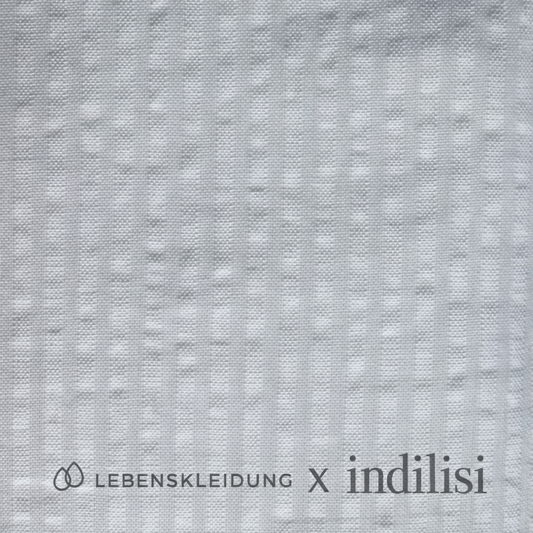
Seersucker – versatile, easy to work with
- Seersucker fabrics look beautiful and immediately catch the eye. Their crepe-like surface is created by varying the tension of the warp threads during weaving.
- Seersucker is a perfect summer fabric because it never lies directly against the skin, allowing for ample air circulation. It's also ideal for bedding and simply looks great!
- Elaborate care? Not necessary here! Seersucker can simply be washed at 30 degrees and doesn't require ironing. If you'd like to smooth out any wrinkles, just give it a quick steam.
What is seersucker?
Seersucker is a unique fabric distinguished by its wavy surface texture. This texture is created by alternating taut and slack threads during the weaving process. The resulting texture promotes air circulation, making seersucker a popular fabric for warm climates.
The history of seersucker fabric
The name "seersucker" comes from Persian and means "milk and sugar." This name refers to the fabric's texture, which is reminiscent of smooth milk and grainy sugar. Seersucker first became popular in the British colonial empire, where it was valued for its breathability and lightness.
The use of seersucker
Seersucker is used in many garments today, including:
- Suits: Lightweight summer suits for men.
- Dresses and skirts: Feminine summer clothing for women.
- Nightwear: Comfortable and airy sleepwear.
- Home textiles: curtains, cushion covers and tablecloths.
How did seersucker become popular?
Seersucker has enjoyed great popularity in the United States since the 1920s, as the fabric was considered ideal due to its breathability and ease of use. Over the following decades, its popularity has remained consistent worldwide, and seersucker has become synonymous with summer elegance.
What's the best way to process seersucker?
If you want to work with seersucker, you should keep a few important points in mind:
- Do not stretch: Do not stretch seersucker, as this can ruin its characteristic texture.
- Choosing the right seam: Use a flat seam so as not to affect the appearance of the fabric.
- Iron with care: Iron with low heat and without steam to avoid flattening the wavy structure.
- Suitable sewing patterns: Choose suitable sewing patterns that highlight the texture of the seersucker.
With these tips and tricks, you can fully exploit the potential of seersucker and create beautiful clothing and home textiles.